About the Simple Elegance of Saying No
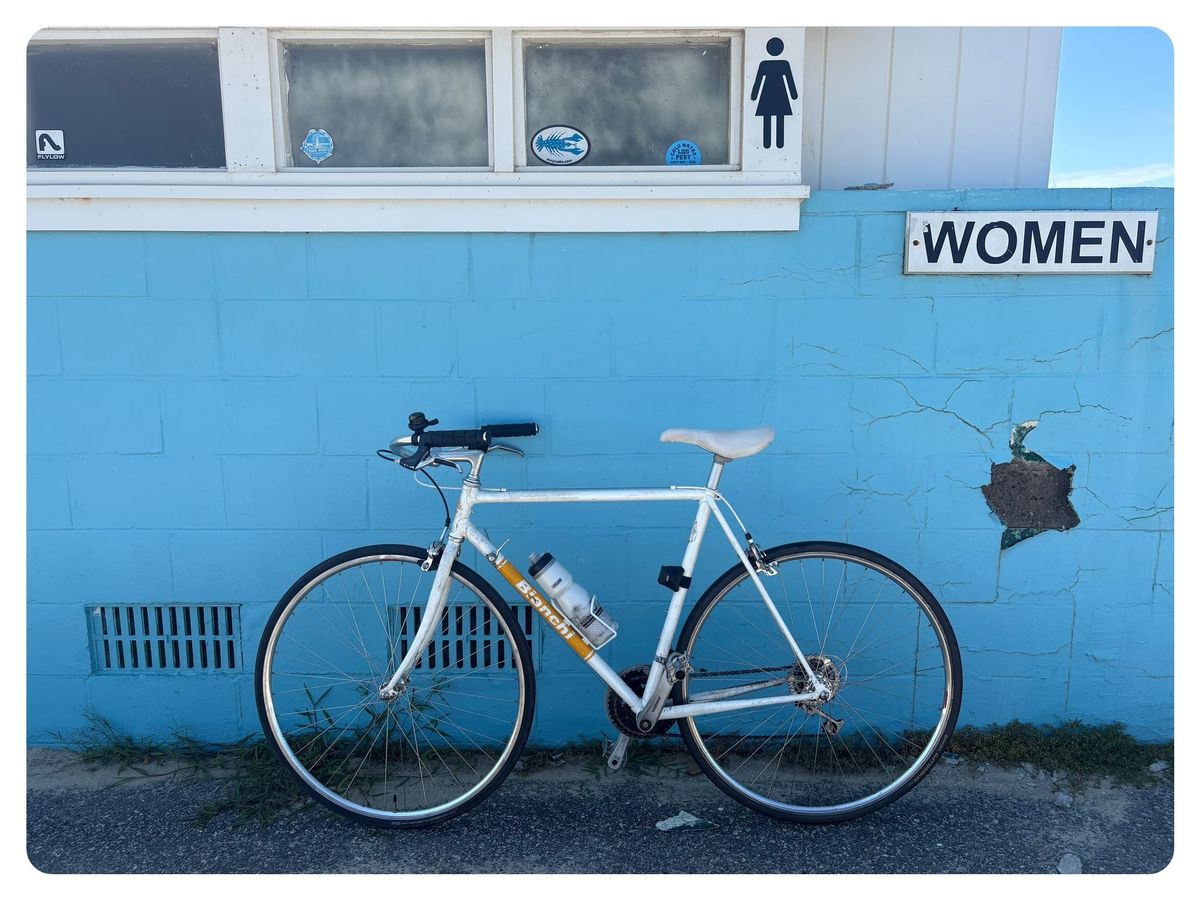
Yesterday I was riding in a two-way bike lane when a Citibiker riding in the opposite direction swerved into my lane almost directly in front of me. There was no collision, but as she passed by, I said, loudly and clearly, "no." That she was wearing earbuds* did not diminish how good this made me feel.
It felt good because I didn't do what I usually do in these situations, which is to use the kind of language that would get me kicked off live radio, language that feels absolutely great and necessary in the moment but typically leaves me feeling a bit grubby, and as though I've given up a part of myself that I didn't intend to. Instead, saying no made me feel assertive but self-contained, as though I'd claimed my agency without sacrificing my dignity. "No" said that I rejected the situation, and the behavior, but also that I refused to waste even a second syllable on the matter.
I remember the first time I said "no" to a total stranger. It wasn't that long ago. I was climbing the stairs from the subway, on the righthand side like a decent person does, when a man barreled down the stairs toward me. He clearly expected me to yield, but I stopped in my tracks. He looked at me, annoyed. I said, "no." I didn't even raise my voice. He continued to look annoyed, but also a little confused, and went around me, and that was that.
Even then, I recognized that I was lucky. Lucky he kept going, lucky he didn't do what too many men do to women who tell them no for whatever reason. Lucky that he didn't teach me the lesson that is imprinted on most girls growing up in our society, which is that you're not supposed to say no, and that to do so is to run the risk of people (men) not liking or loving you, or (much) worse. "Yes" makes you pliant, and fun, and pleasant, and all those things that girls are taught they should be in order to succeed in life; "no" is the language of ballbreakers and sexless killjoys, the girls who become women who spend their nights alone, growing mustaches and listening to the crackling sound of their ovaries drying up.
"Yes" is also the language of inveterate people pleasers, and I'm one of those too, often to my own detriment. For most of my life, "no" felt less like a word than a rejection of my own identity. I'm not sure what eventually caused this to shift, aside from the mundane occurrence of getting older.
[One of the things that most fascinates/disgusts me about our current plastic surgery epidemic is how it targets women who have reached an age where we finally feel comfortable in ourselves, and gives us the message that actually no, real self-empowerment lies in the ability to better resemble the less experienced, and thus less threatening versions of ourselves. But I digress.]
Anyway, I was thinking about all of this yesterday because the writer Anna Holmes was on WNYC to promote her new book, The Power of No. Holmes makes the case that saying no can — among many other things — radically change the way we carry ourselves. That made me remember the encounter on the subway stairs, and in the bike lane, and I realized that saying no had changed the way I carried myself: I felt a little taller, a little more elegant. It made me think of Coco Chanel's advice to remove one accessory before leaving the house: the accessory I'd removed by saying no was too much of my time and effort. No wonder it felt so good. It turns out that saying no is often the best way to say yes to self-preservation.
*Citibikers and earbuds go together like gasoline and a lit match, but that's another post for another day.
What I'm consuming this week:
Reading: I'm about to start Nathanael West's The Day of the Locust and I'm feeling both excited and trepidatious since, well, darkness.
Watching: Standing Up. This is a highly enjoyable French Netflix series about struggling standup comedians in Paris, and it understands both humor and stakes. (Thanks for the rec, Alex!)
Listening: Sharon Van Etten, "Afterlife."