About Rewatching 'Thelma & Louise' After Cornell and SNL
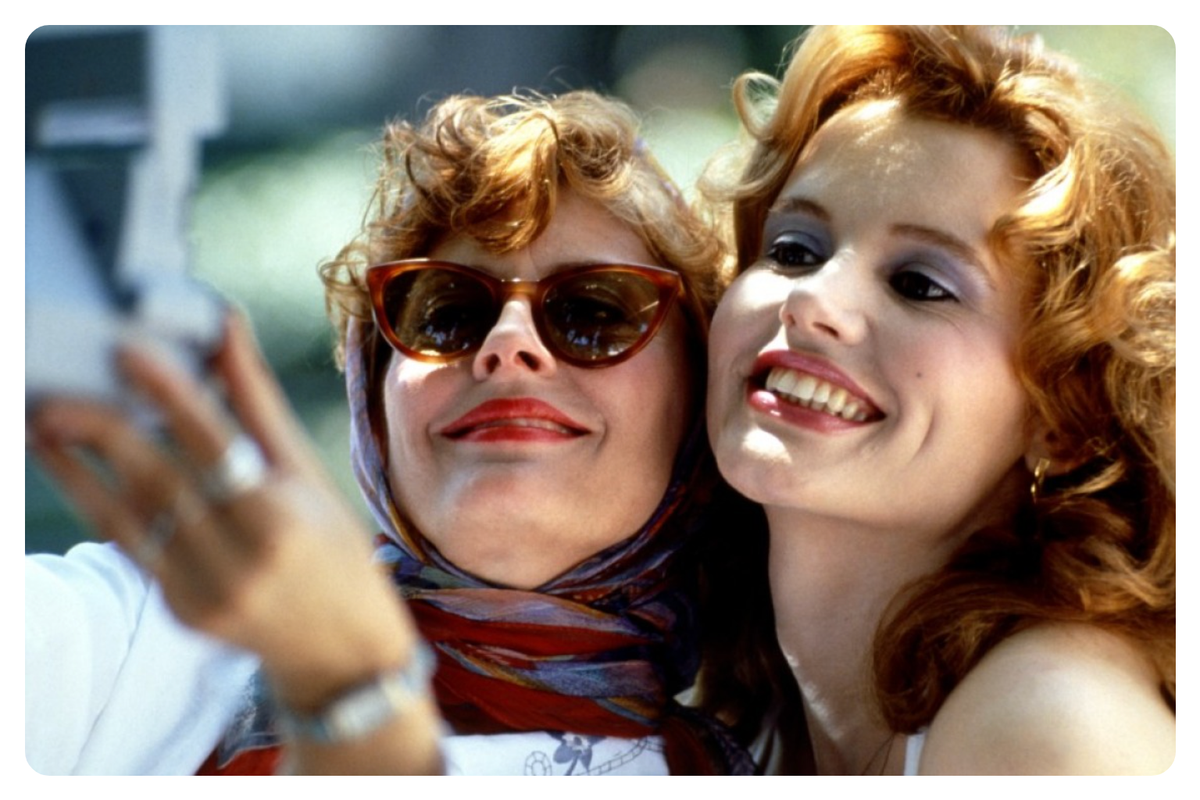
I was 15 when I first watched Thelma & Louise. I saw it in the theater with my best friend, and it spoke to us loudly enough that we began to call each other Thelma and Louise (I was Thelma) and I drew a picture of the movie's poster on my locker door. But I didn't really revisit the movie over the years, mostly because I didn't need to: it was seared permanently in my brain.
But when Thelma & Louise popped up on Hulu last weekend, I decided it was time for a rewatch. I wanted to see how and if it had held up since its release 35 years ago, and whether it differed from the version that existed in my memories.
Two hours and 10 minutes after pressing "play," I could say definitively that a couple of things about Thelma & Louise have not held up: the Confederate flag t-shirt Thelma wears late in the movie; the fact she would leave a self-confessed robber alone in her hotel room with an envelope containing $6,600. But mostly? Thelma & Louise has held up well. Really, depressingly well.
Earlier that day, I'd made my way through yet another article about the alleged gang rape that took place in a Cornell frat house in October 2024. And earlier that evening, Shane Gillis went on Saturday Night Live and called women whores for wearing shorts at the gym. Both of these things are what Thelma & Louise is about: literal rape, yes, but also the myriad ways that men so casually demean women until they're little more than bodies to violate and dispose of. And both embody just how little has changed in 35 years; maybe the only significant shift is the public's means of expressing outrage.
Thelma & Louise also inspired some outrage when it was released, mostly on the part of male film critics who objected to its depiction of almost all of its male characters as buffoons of no real import. Some deemed the movie an example of "toxic feminism"; one even labeled it "neo-fascist." Writing in the New York Daily News, Richard Johnson huffed that the film was "degrading to men, with pathetic stereotypes of testosterone-crazed behavior." Some women didn't like it either: in Time, Margaret Carlson complained that the title characters acted like men and asked "is this what feminism is all about?" The Los Angeles Times film critic Sheila Benson wrote that the film showed "an awful contempt for all men."
I was unaware of this criticism when I first saw Thelma & Louise. Reading it now, I can see how poorly it's aged, but also how much I've changed. At 15, I was lucky enough to operate largely in a state of blissful ignorance, and my feelings of anger hinged on what I perceived as personally unfair to myself. Today, I am all too aware, and thus I am angry: at structures and systems and various individuals, and, perhaps most of all, the way society continues to enable and reward bullies. So much of my anger can be summed up by the fact that in the year 2026, a major television network found it more acceptable for a man to call women whores on live TV than to drop the f-bomb. A mediocre, un-funny man who has been able to fail upwards, as mediocre men are wont to do. A mediocre man who used his platform to remind women that they're somehow asking for it with what they wear, but that they need to relax because it's just a joke, even if, haha, they are the joke.
In the movie, Louise tells Thelma they can't go to the police after she shoots Thelma's would-be rapist because no one will believe them; Thelma was seen dancing and flirting with him, after all. She asked for it, like the whores in their gym shorts and the Cornell sophomore who went to the frat party. No wonder Thelma and Louise were so angry. No wonder they ran. No wonder they decided that driving off a cliff was a better option than taking their chances with the men pointing guns at them. No wonder that when I finished the movie, all I wanted to do was scream.
What I'm consuming this week:
Watching: A compilation of Key & Peele's worst dating fails. A perfect palate cleanser.
Reading: Heavy Cream, the second novel from Sarah Blakley-Cartwright. It's a bit like Running on Empty meets Anywhere But Here meets Alice in Wonderland — all of which is to say that I'm enjoying it very much.
Listening: Cassandra Wilson, "Harvest Moon."