About the Thrill of a Bad Criterion Movie

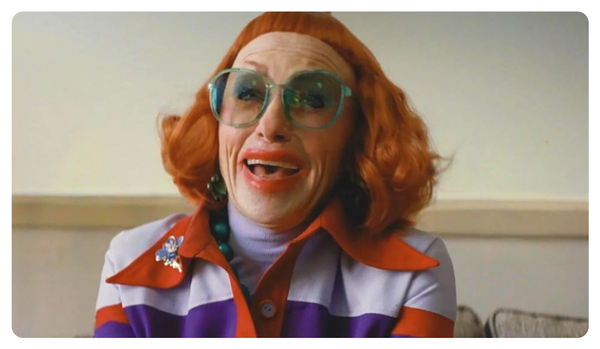
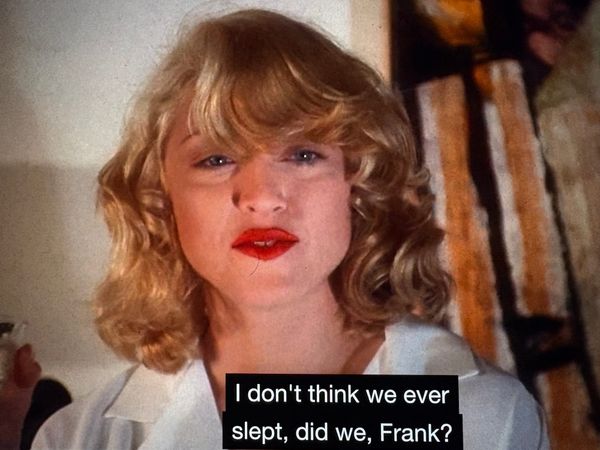
When I finally gave in and bought a Criterion Channel subscription a couple of years ago, I readied myself for a steady diet of what a friend once referred to as broccoli movies, meaning movies that are good for you. Obscure European art house cinema, Golden Age Hollywood gems, the American indie canon — I welcomed anything that would broaden my cultural enlightenment. But I also craved trash — the so-bad-it's-bad spectacle of, say, Lily Tomlin as a lonely Beverly Hills socialite and John Travolta as the drifter who becomes her lover, or Diane Keaton as a meth addict.
So what a pleasant surprise to discover Criterion's delightful little secret: it's full of terrible movies that aren't aware they're terrible. It's on Criterion that I belatedly discovered the prestige mess that is Vanilla Sky and watched Bruce Reynolds divorce Candice Bergen in Starting Over. It was Criterion that gave me Gypsy 83, a 2001 movie about a goth and her gay that culminates with the goth having sex with a duplicitous Amish man on the bathroom floor of a rest stop. And this month, Criterion has blessed me with its Corporate Thrillers series, which means that I can fritter away my one wild and precious life watching Demi Moore take advantage of poor, helpless family man Michael Douglas in Disclosure and Al Pacino inhale every last crumb of scenery in The Devil's Advocate.
Last week, I decided to watch Antitrust, a 2001 thriller in which Ryan Phillippe plays an idealistic young computer programmer who is hired to work for a Bill Gates-esque tech mogul played by Tim Robbins. It took me three nights to finish watching this film, an honor it shares with Tár. Like Tár, Antitrust takes itself so seriously that it is often very funny. Unlike Tár, its suspense revolves around open-source software and a sesame allergy. It requires Richard Roundtree, playing a Justice Department official, to promise Phillippe "$42,000 and a Buick" if he comes to their side. The acting is monumentally bad. Robbins' evil CEO works in an office that appears to be located in a Natural History Museum diorama. It is a thriller insofar as it is thrilling to watch the extent to which established actors will debase themselves for a nice paycheck.
I like to say that Antitrust crawled so that The Social Network could fly, but I feel nothing but gratitude for its sub-mediocrity. It makes me think back to just after September 11, when a man was quoted in the paper saying that he went to see Glitter just so he could experience something even worse than what had just happened.
That's the beauty of terrible movies, particularly those that labor under the delusion of quality: they provide a release valve. They're like a car accident with no victims, a dumpster inferno that doesn't do property damage. They're crimes devoid of consequence, as pure as a zipless fuck. It takes a special movie to fail spectacularly while maintaining the courage of its convictions, and for that reason I find bad movies as instructive as so-called good ones — they show us that failure can be far more memorable than success. Some might call them a guilty pleasure. I prefer to call them a civic duty.
What I'm consuming this week:
Reading: "Why the Cookbook Endures," Taste.
Watching: Sidney Lumet's The Pawnbroker, easily one of the most relentlessly depressing movies I've ever seen and also one of the most beautifully shot.
Listening: The English Beat, "Save It for Later."